
Lead with Strengths, Not Stats!
Turning Your Athletic Profile into a Must-Read Narrative
In the crowded world of digital recruiting, stats are just noise—your unique strengths are the signal that makes a coach stop scrolling and start watching.
Lead With Strengths, Not Stats: The Secret to Winning the Recruiting Game
Walk onto any high school campus or scroll through "Recruiting Twitter," and you’ll see the same thing: a sea of numbers.
- "Averaged 18.4 PPG"
- "4.5 forty-yard dash"
- "300lb Bench Press"
To most student-athletes, these numbers feel like the golden ticket to a college scholarship. But here is the cold, hard truth from the other side of the desk: To a college coach, your stats are often the least interesting thing about you.
If you want to move from a "maybe" to a "must-have" on a recruiting board, you need to stop selling your numbers and start selling your strengths.
The Problem with the "Stat-First" Mentality
Why don’t coaches trust your stats? It’s not that they think you’re lying (though some do); it’s that stats lack context.
When a coach sees that you scored 25 points in a game, they immediately ask three questions that your stat sheet can't answer:
- Who was the opponent? (Was it a Top-25 powerhouse or a struggling program?)
- How were they earned? (Were they "garbage time" points or clutch shots under pressure?)
- Are they verifiable? (Was the timing laser-measured or a "dad with a stopwatch"?)
Stats are a "filter"—they might get a coach to click on your profile—but they aren't the "hook" that makes them want to offer you a roster spot.
What is a "Strength" Anyway?
A strength is a repeatable, transferable skill that solves a problem for a coach. While stats tell a coach what happened in the past, strengths tell a coach what will happen when you put on their jersey.
Think of it this way:
- A Stat is: I had 5 sacks last season.
- A Strength is: I have an elite first step and a high motor that allows me to win late-game matchups when the offensive tackle is tired.
One is a number on a page; the other is a vision of how you win.
Flipping the Script: How to Rebrand Yourself
If you want to stand out, you need to change your "elevator pitch." Look at the difference between these two approaches:
The "Stat" Approach (Forgettable)vs. The "Strength" Approach (Memorable)"
- Stat - I'm a 40% three-point shooter.
- Strength - I am a high-IQ floor spacer who creates gravity for my teammates and excels in catch-and-shoot situations.
- Stat - I lead the team with 80 tackles.
- Strength - I am a sideline-to-sideline defender with a high 'nose for the ball' and elite shedding technique.
- Stat - I have a 3.9 GPA.
- Strength - I bring the same discipline to the film room that I do to my AP courses; I’m a student of the game who learns playbooks fast.
Why "Strengths" Hook Coaches
Coaches are essentially building a puzzle. They aren't looking for "the best player"; they are looking for the right piece.
When you lead with a detailed description of your strengths, you are doing the work for them. You are showing them exactly where you fit in their system. A coach can’t always visualize "10 rebounds per game," but they can absolutely visualize a "tenacious rebounder who prioritizes box-outs and hunts long rebounds."
Action Step: Audit Your Profile
Take five minutes today to look at your social media bios, your Recruiting profiles, and the emails you send to coaches.
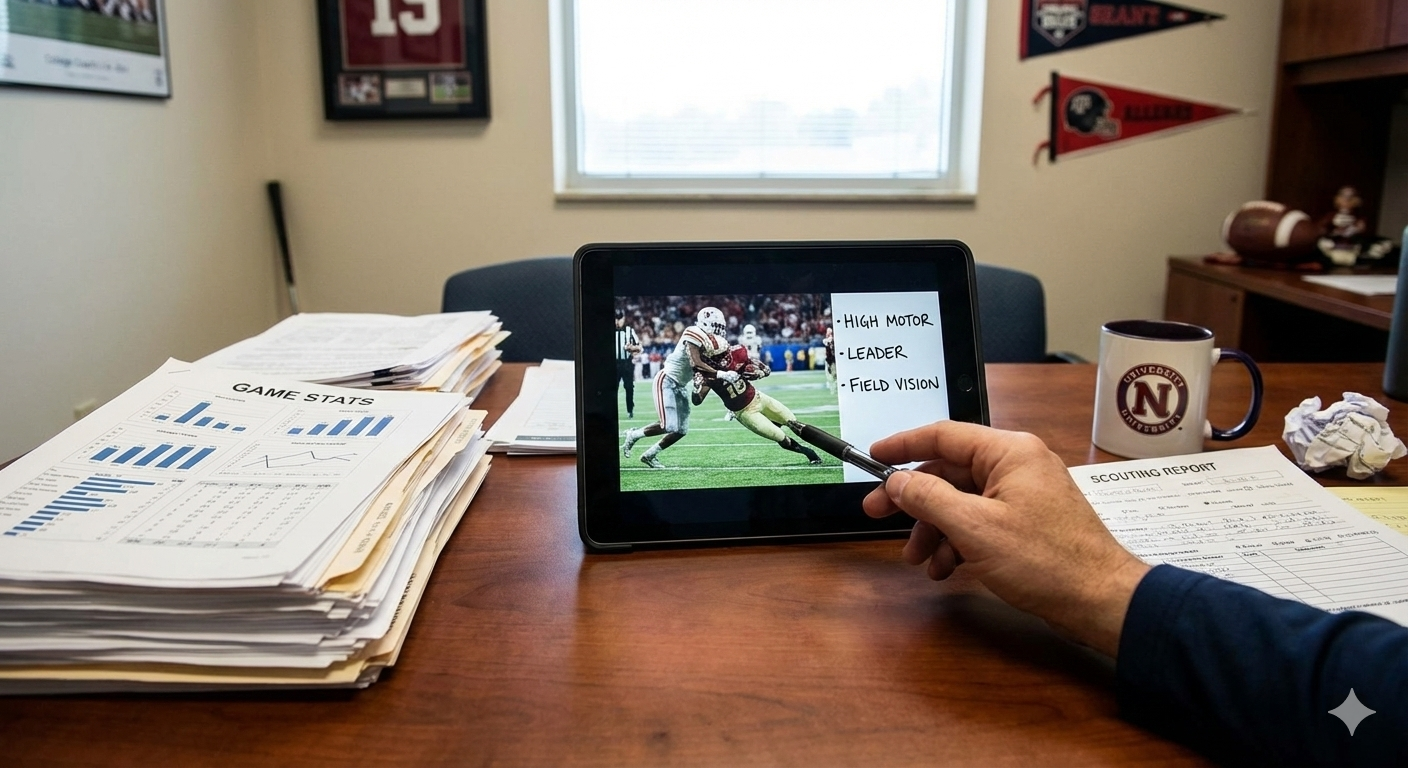
- Identify your "Big Three": What are the three things you do better than anyone else on the field? (e.g., leadership, lateral quickness, vision).
- Add Descriptive Detail: Use "action" words. Don't just say you're fast; say you "exploit seams" or "close gaps."
- Provide Proof: Instead of just a stat, link a video clip that specifically shows that strength in action.
The Bottom Line
Stats may get you noticed, but strengths get you recruited. Stop being a set of numbers on a spreadsheet. Start being the specific solution a coach has been looking for.